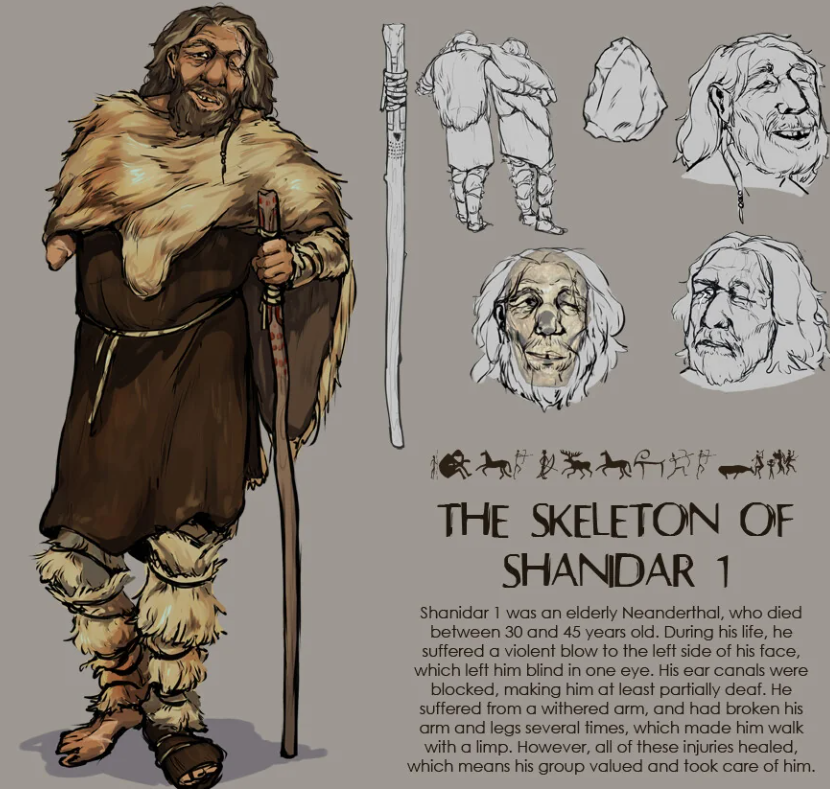
He’s around forty-five, and he’s the oldest person anyone in the band has ever known.
Most of his back teeth fell out years ago. He can’t chew tough food anymore. Someone pounds his meat soft for him, or he eats organ meat and marrow instead. His hip and spine are so arthritic he moves stiffly, like his joints are made of wood.
He hasn’t brought in a single kill in more than five years. The band is nineteen people, living on the edge of survival. And still, they keep him.
Ss’gor gets irritated with him sometimes: his slowness, the groan he makes all the time, the way he urinates on the cave floor. He puts more wood on the fire than necessary. It eases his joints. She’s the one who collects it. But he eats every day. He has for years.
He knows things. He’s watched this valley longer than anyone alive. He remembers the year the river shifted course; nobody else does. He knows which slope holds snow the longest, a fact that’s useless until, one day, it isn’t. He knows how to make tar, and he’s better at it than the younger man learning the craft.
When he dies, this small, isolated group will lose skills and stop advancing.
Ss’gor sits beside him while she works a hide, not masterfully. She’s ten. He talks, repeats himself, goes in circles. But she listens. And some of what he tells her, she’ll still be using ten years from now. Though, she thinks, the band would do better with one less mouth to feed. Not out of sentiment, exactly. She never says this out loud. She never says much of anything. That’s why the band named her Ss’gor: “the quiet one.”